

A Place is Not One Place
Review: OCA/RPS Investigating Place with Psychogeography

Walking in the landscape and taking photos has always seemed a natural
combination to me, but last year I kept leaving my camera at home because 'I've
already photographed that' (though it didn't seem to matter that I'd 'already walked
there'). Needing a boost, I decided to sign up for the 10-week OCA/RPS online
course Investigating Place with Psychogeography.
From the introductory reading list, it seemed, to me at least, to be quite hard to pin
down what exactly psychogeography was and how to do it. Essentially. geography
+ psychology - psychogeography - studying the effect of geographical environment
on human emotions and behaviour.
A key strategy of psychogeography is the “derive" or the "drift": walking while using
de-familiarising and disorientating tactics to experience terrain with fresh eyes. For
instance, you might decide always to take a left turn at a fork, or draw a curve on a
street map that you then try to follow, or use a map of one place to try to navigate
another.
The first exercise on the course is, naturally, a dérive. I decided to visit a village
just three miles from home that I only ever drive through. I "drifted" up and down
the suburban streets and found plenty to photograph: every garden and doorway
presented a still life, a statement of individuality.
My second dérive took me to Matlock Bath, with its peculiar mix of Georgian
architecture, amusement arcades and stunning limestone rockfaces. It's a place I
thought I knew well, but a steep footpath took me to new, high landscape
viewpoints before dropping down to the familiar river path. I was taking
photographs and feeling exhilarated.
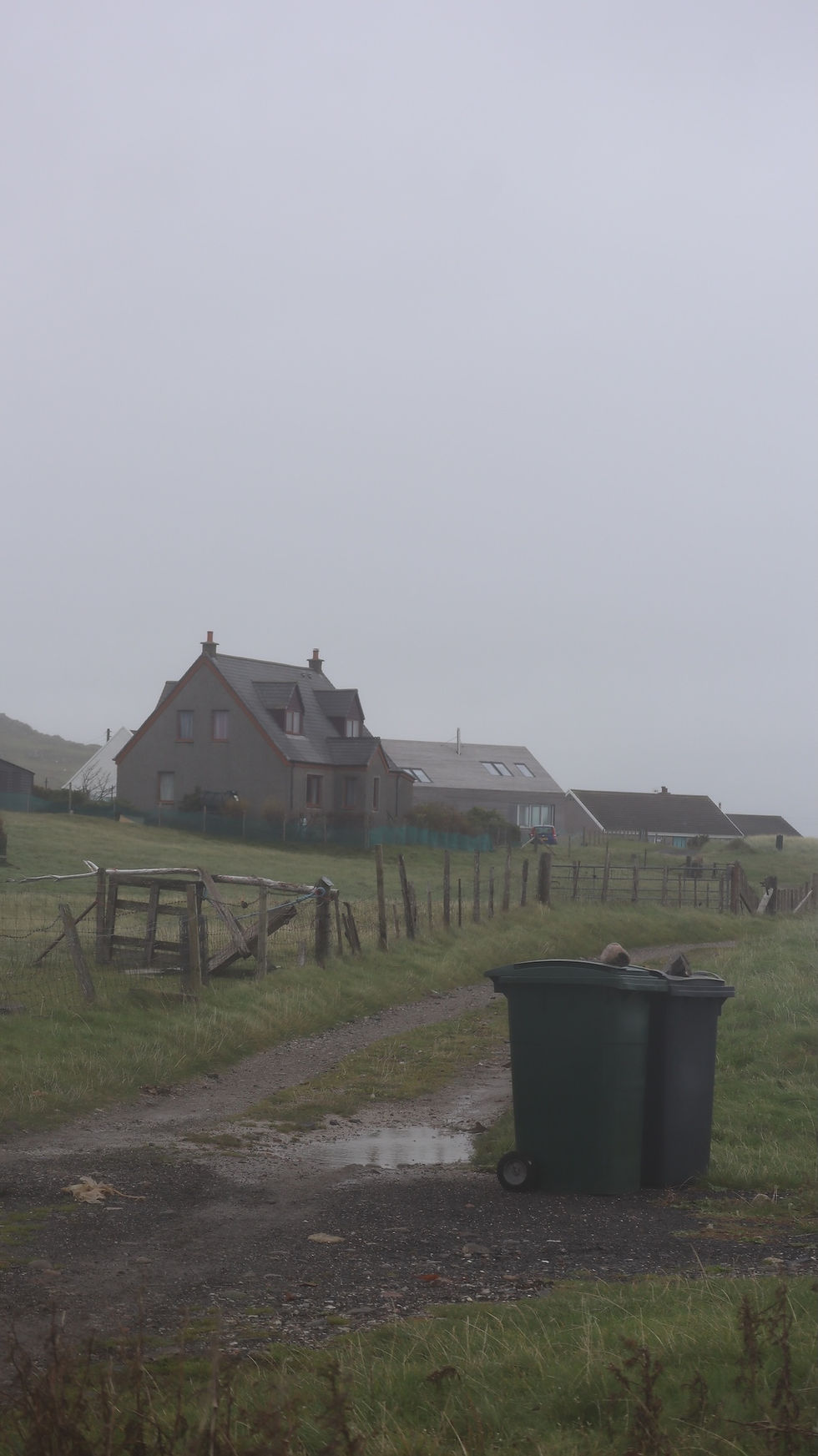
I visited Iona during the course and, in the spirit of the dérive, randomly turned left from the ferry terminal. The coast path soon petered out and I ended up going round in circles on a bleak, boggy moor in sideways Scottish rain. When I
eventually arrived at Iona Abbey (the reason most people make the "pilgrimage"here), the staff were locking up. I suppose it was a "different experience. especially considering that it was the bold colours of light-filled Scottish Colourist paintings that had lured me here.
The psychogeography course encourages you to connect, explore and experiment far beyond documenting a place through photography.
Writing, poetry, drawing, mapping from memory, thinking about what a map cannot convey - all those sensory elements are a part of it. In fact, midway through the course, I experienced methodology overload! It was then that my tutor offered a really helpful take on psychogeography: it was a way of engaging deeply with
place to generate creative outputs.
In addition to this, a colleague lent me Sonia Overall's Heavy Time: A
Psychogeographer's Pilgrimage, which was the most relatable book I read on
"how to do" psychogeography. She emphasised "going with the flow" and "tuning
in"; she collected talismans; she experienced "thin places" where reverberations
from the past were felt in the present.
All this came together in my final project, which focused on Cales Dale in
Derbyshire's White Peak. To me, it has always felt like a special place.
I already knew that prehistoric people had lived and worked there, sheltered by the
limestone. But I had not realised there was an extensive cave system beneath the
dale until my research brought up a video of someone enthusiastically making
their way through the dark and the mud. I was conscious now of layers through
time, through rock, of portals into other worlds.
The impact of ash dieback was horribly apparent. There were so many fallen
trees. Nearby were extensive programmes of felling and the beginnings of mixed-
species replanting. I was witnessing a transformation.
The photographs I took were landscapes, inevitably, but I layered some of them. A
“talisman”, a small piece of limestone from the dale, became a key component of
still-life experiments back at home. A white background created a clinical look. I
returned to the subject the following week using a black backdrop. This time I
wanted to evoke 17th-century Dutch still life: "memento mori". When the backdrop
began to smoulder, (an unexpected shaft of sun hit the mirror I was using), I kept
shooting.

The next issue was how to bring a range of experiments together into a final
project.
I returned to Cales Dale. It was a misty day; I was alone and feeling apprehensive.
I had brought along some prints of my photographs, thinking I might stick them to
the limestone "walls", but it was too steep and slippery to work near the rockface. I
sat down perplexed. Then I noticed the dry cow parsley stalks. I tried attaching my
prints to them with sellotape; one photo (of ash seed, appropriately) fell into the
undergrowth, but the others stayed stuck and wafted gently. It felt an uplifting kind
of conclusion: to hold a very small exhibition of my photographs “en plein air" with
the dale as subject, backdrop and the only audience.
When I downloaded my photographs at home, my views down into the dale had
strange little dark blots in places, perhaps they were dust or droplets of moisture?
Or perhaps a manifestation of ash dieback? It summed up the strangeness of the
day.
I finished the course with a whole list of project ideas, and I definitely take my
camera out on walks again. I found focusing on one place while being encouraged
to experiment with method and material a really powerful process. My experience
with psychogeography has shown me how to look deeper, look differently.


I too have completed the Investigating Place with Psychogeography course, and I cannot agree more with your comments. It's a fantastic course and you write about it so evocatively. The fragmented photos are wonderful - they remind me of broken china.
Your images are beautiful and very engaging. Your description of the course is wonderful too. I could read a whole book of your journey following the course instructions accompanied by the resulting illustrative images.